Softwash and Pressure Washing for Commercial Buildings in Greater Victoria
Softwashing uses low pressure and a cleaning solution to lift grime, moss, and organic staining. Pressure washing uses high-pressure water and mechanical force. For most stucco, vinyl, and painted cladding, softwash is the safer choice. High pressure can drive water behind cladding or strip a coating, and that can put a manufacturer or building-envelope warranty at risk.
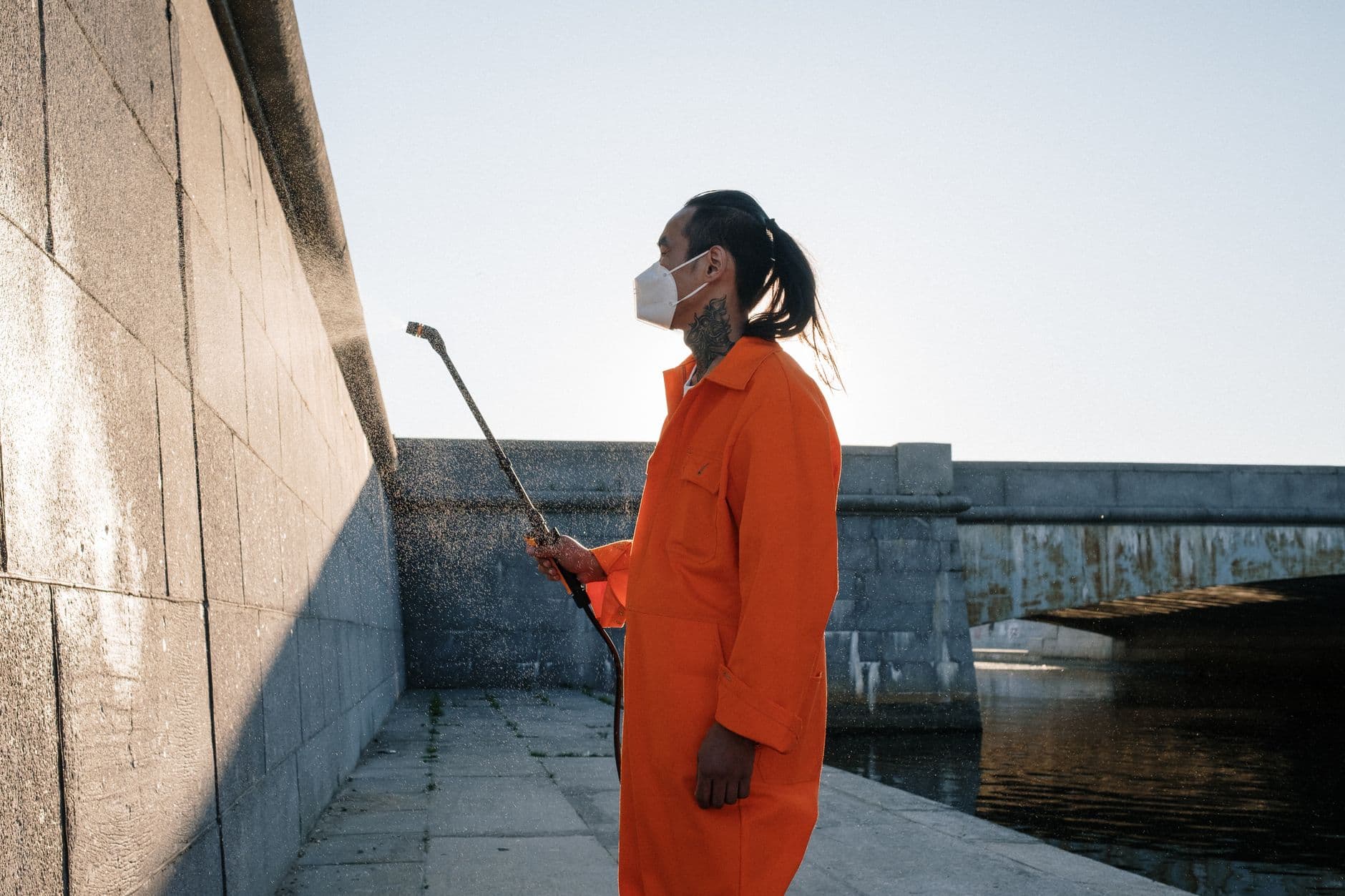
How the work is done
Softwash applies a diluted cleaning solution at low pressure, lets it dwell, then rinses. It suits stucco, vinyl, painted surfaces, and soft substrates. High-pressure washing is reserved for hard surfaces like concrete walkways, parkades, and some masonry where mechanical force will not cause damage.
The safety rules that govern it
Exterior washing that is done from height, a lift, or a suspended platform is governed by the same WorkSafeBC fall-protection and equipment rules that apply to window cleaning.
WorkSafeBC: read the source ↗What moves the price
Surface area and cladding type
Total square footage and whether the surface is soft (stucco, vinyl) or hard (concrete, masonry).
Access and height
Whether crews work from the ground, a lift, or a suspended platform.
Degree of soiling
Heavy moss, algae, or salt-air staining takes more solution and dwell time.
Wastewater controls
Commercial washing often needs runoff containment to meet local bylaws.
We do not publish a flat rate. A fair number is scoped to your building, not guessed from a template.
Questions to ask before you hire
These arm you against a bad contractor. A company that answers them clearly, in writing, is easier to defend to your board.
- 01Will you softwash or pressure wash our cladding, and why is that safe for our surface?
- 02Could your method affect our cladding or building-envelope warranty?
- 03How do you contain and dispose of wastewater on a commercial site?
- 04Can you show insurance that would cover cladding damage?
Common questions
What’s the difference between softwashing and pressure washing, and which one is safer for my building’s exterior?
Softwashing cleans with low pressure and a solution; pressure washing cleans with high-pressure water. For stucco, vinyl, and painted cladding, softwash is safer because high pressure can force water behind the cladding or strip the finish. Pressure washing is best kept to hard surfaces like concrete and parkades.
Can pressure washing void my cladding warranty?
It can. Many stucco, vinyl, and coating manufacturers specify a maximum cleaning pressure, and washing above it can void the warranty. Ask any contractor to confirm their method matches your cladding manufacturer’s cleaning guidance before work starts.
Get a quote for softwash and pressure washing
Send your building details and get matched with one vetted, insured local contractor in Greater Victoria.
Call (250) 555-0142